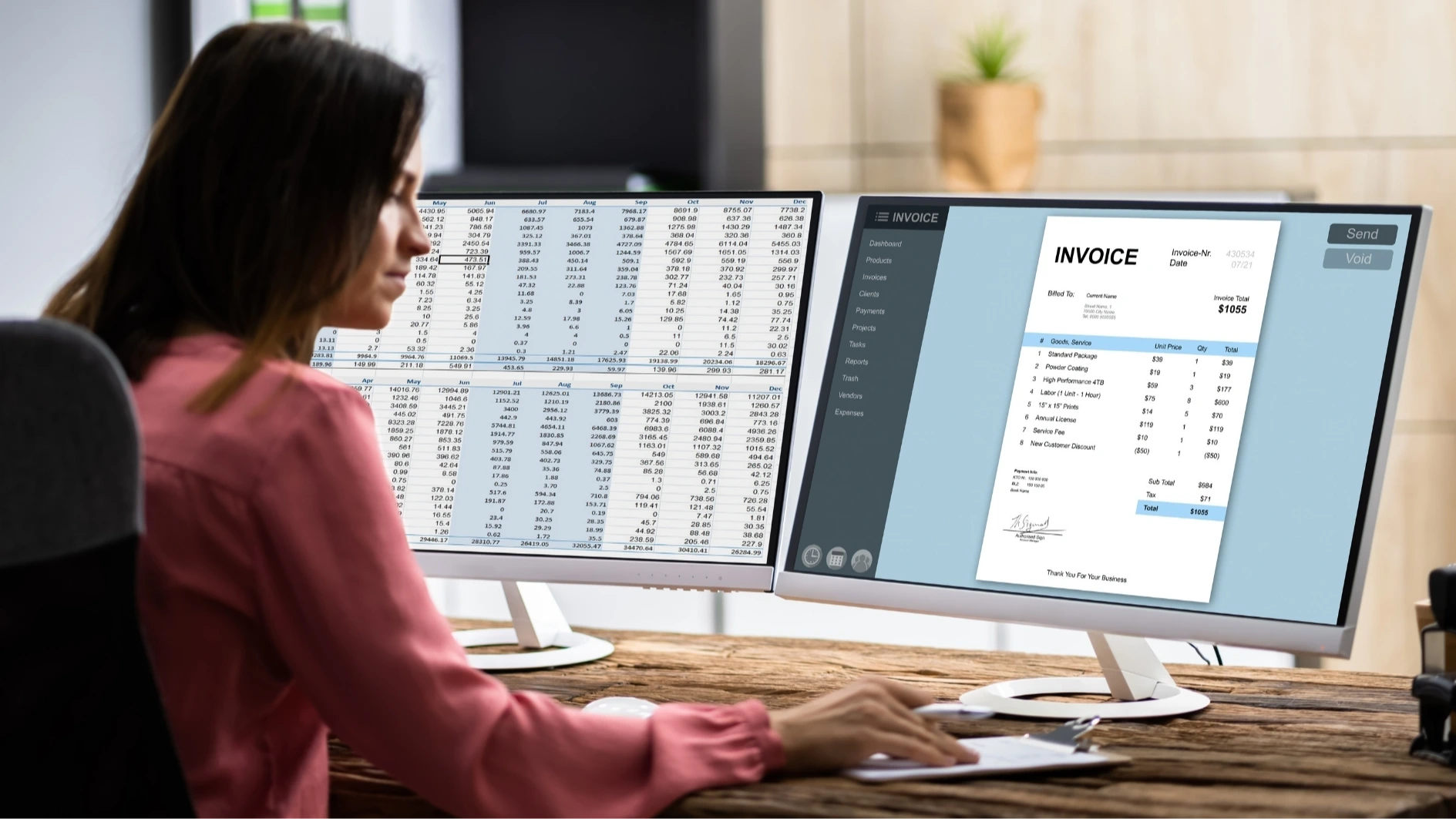
ERP for Financial Management: A Smart Way to Control Exchange Rates and Business Margins
Quick Answer: ERP Helps Keep Margins in Check
Cloud accounting software Indonesia helps businesses control exchange rate differences and margins by recording transactions, invoices, payments, and financial reports in one system.
- Exchange rate differences can be monitored from the PO, invoice, to incoming payment.
- Margin is not only calculated at the start of the quotation, but also after payment is realized.
- Cash flow is easier to predict because receivables and payables data is visible in real time.
- The finance team can reduce manual input and the risk of miscalculation.
- Ideally, margins are rechecked after each transaction is completed or at least weekly.
Why Can Exchange Rate Differences Erode Business Margins?
In practice, many businesses feel profitable at first, but margins eventually decline after payment is made. The reasons are often simple: exchange rates change, payments are delayed, bank fees arise, or manual record keeping is still used.
For example, a company purchases software or goods from a foreign vendor in USD. When the quotation is created, the exchange rate is Rp15,800. However, when the vendor is paid, the exchange rate rises to Rp16,200. A difference of Rp400 per USD may seem small, but for a USD 10,000 transaction, the impact can reach Rp4,000,000.
If the initial margin is only 15–20%, such an exchange rate difference can immediately cut into profits. This is where ERP for financial management becomes crucial.
ERP helps connect purchasing, sales, invoice, payment, and reporting data. When a purchase order is created, the system records the transaction value. When an invoice is issued to a customer, the system records the sales value. When payments are received or paid out, the system helps identify any gains or losses due to exchange rates.
Amidst business growth, the use of Cloud accounting software Indonesia It is a strategic step because the company no longer relies on separate Excel files, chat approvals, or reports that are only completed at the end of the month.
With an integrated system, owners and finance managers can view margin positions more objectively. For example:
If the project value is Rp250 million with an estimated margin of 30%, the company expects a profit of around Rp75 million. However, after accounting for exchange rates, bank fees, and late payments, the actual margin can drop to 22–25%. Without ERP, this decline is often only apparent after the monthly report is completed.
ERP makes data appear faster. This means faster decisions can be made: whether prices need to be adjusted, whether a 2–5% exchange rate buffer is needed, or whether customer payment terms should be shortened.
Practical Checklist to Prevent Margin Leaks
- Use the reference rate when creating quotations.
- Add a 2–5% exchange rate buffer for foreign currency transactions.
- Record the exchange rate at the time of PO, invoice, vendor payment, and customer payment.
- Monitor estimated margin vs actual margin.
- Use approval for large transactions or overseas purchases.
- Review accounts receivable aging at least weekly.
- Create a cash flow dashboard for the next 30, 60, and 90 days.
- Make sure the profit report is not only based on sales, but also on cost realization.
FAQ
1. What is the function of ERP in financial management?
ERP helps manage financial transactions, receivables, payables, invoices, purchasing, cash flow, and reports in one system.
2. Can ERP calculate exchange rate differences automatically?
Yes, depending on the system's features. At a minimum, ERP helps record exchange rates at each stage of a transaction, making it easier to analyze gains and losses.
3. Why can the margin differ between quotation and realization?
Due to exchange rate changes, additional fees, late payments, discounts, bank fees, or incomplete cost recording.
4. What is the ideal exchange rate buffer for a business?
Generally 2–5%, depending on the transaction value, exchange rate volatility, and payment terms.
5. Is cloud accounting suitable for small businesses?
This is especially suitable if your business already has regular transactions, lots of invoices, or is starting to handle customers and vendors across currencies.
6. What are the risks of still using Excel?
The risks are that data is scattered, prone to input errors, difficult to audit, messy approvals, and actual margins are often known too late.
7. When should a company start using cloud accounting?
When reports start to be late, invoices increase, cash flow becomes difficult to predict, or the owner has difficulty seeing the profit position in real-time.
Controlling exchange rate differences and margins is not just a finance task, but part of a business strategy. Cloud accounting software Indonesia, companies can make faster decisions, maintain healthy profits, and reduce the risk of margin leakage.
Want to know which financial management system is best for your business? Consult with us about your needs and we'll find the most relevant solution.