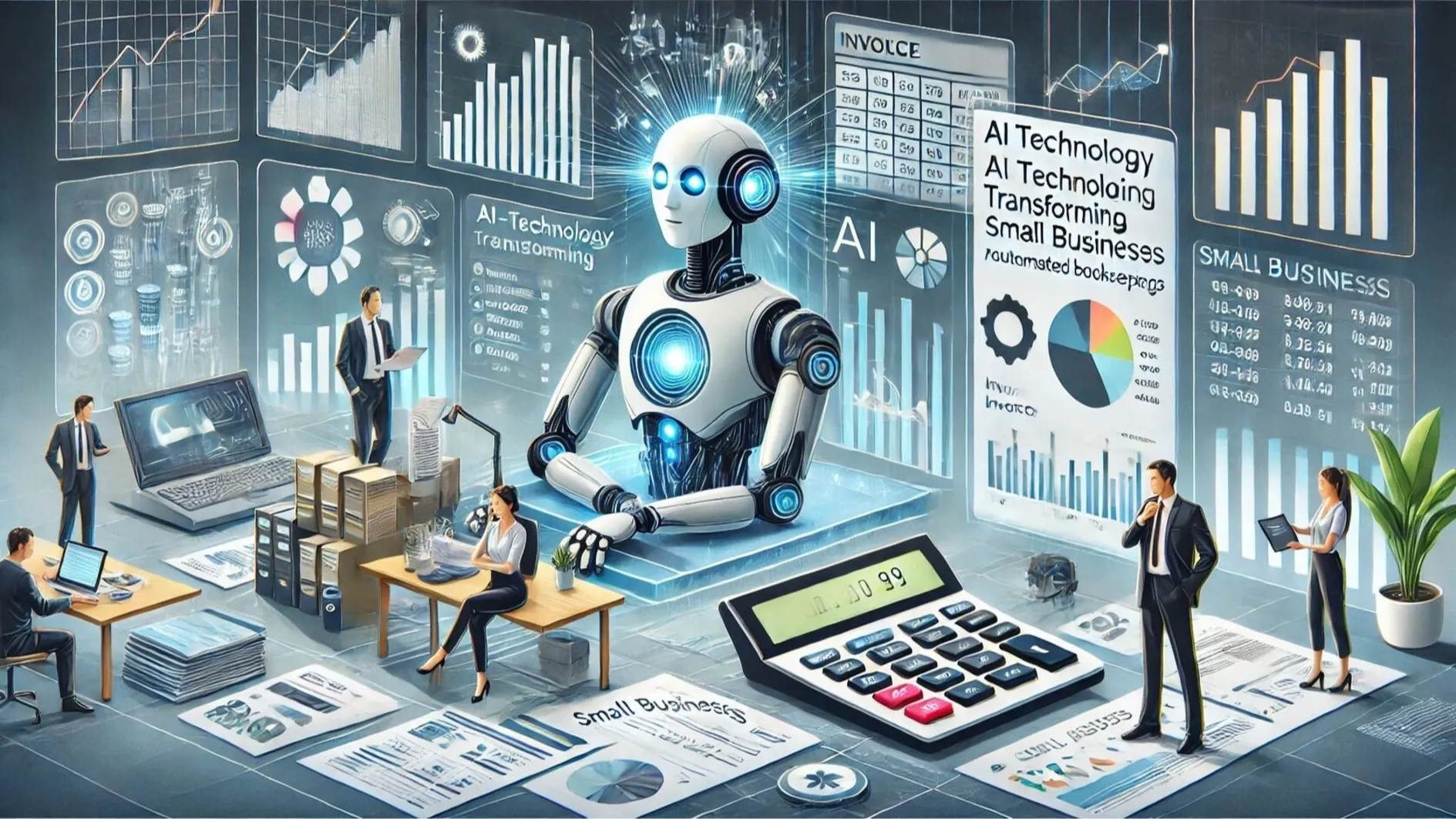
Why is AI Bookkeeping a New Trend in the World of Business and Finance?
In recent years, AI bookkeeping has become one of the most talked-about topics in the world of business and finance. And for good reason. Companies are now required to work faster, more accurately, and more efficiently amidst increasing transaction volumes and operational complexity. With the support of AI and best accounting software, financial processes that previously took hours can now be completed in minutes.
Why is AI Bookkeeping Getting More Popular?
- AI is capable of automating financial administration work by up to 50–80%.
- The process of inputting transactions, invoices, and reconciliation can be done automatically.
- Integration with best accounting software allows financial data to be updated in real-time.
- The risk of human error can be reduced because the system performs automatic validation.
- The finance team can focus more on business analysis and strategy rather than administrative work.
Factors That Make AI Bookkeeping a Trend
Changing business behavior is one of the main reasons why AI accounting is growing so rapidly. Companies today generate far more financial data than they did just a few years ago.
While businesses previously processed only dozens of transactions per month, many now have to handle hundreds or even thousands of transactions in the same period. When the entire process is still done manually, the risk of errors and reporting delays increases.
Through integration with best accounting software, AI can help address these challenges.
1. Increasing Need for Operational Efficiency
Many companies are starting to realize that tasks like data entry, invoice recording, and bank reconciliation are time-consuming, repetitive activities.
In practice, finance teams can spend 2–4 hours each day just on administrative work. With AI and best accounting software, most of these activities can be automated.
2. Businesses Need Real-Time Data
Owners and management no longer want to wait for end-of-month reports to find out the condition of the company.
They need information such as:
- What is the cash position today?
- Which invoices have not been paid?
- Is the company's cash flow safe for the next 30 days?
With AI connected to best accounting software, all of this information can be accessed in real-time via the dashboard.
3. Human Error Remains a Major Challenge
Nominal input errors, duplicate transactions, or missed invoices still frequently occur in manual processes.
AI can help detect transaction anomalies, validate data, and provide notifications when information is inconsistent. This helps improve the accuracy of financial reporting.
4. AI Technology is Becoming More Accessible
While financial automation was once only available to large companies, today many cloud-based solutions are accessible to both MSMEs and enterprises.
In fact, by using best accounting software, companies can start digitizing without large infrastructure investments.
5. The Role of Finance is Changing to Become More Strategic
The finance division's role is no longer limited to recording transactions. Today, the finance team is expected to provide business insights, conduct forecasting, and support decision-making.
As administrative work begins to be automated, teams can focus more on high-value activities such as profitability analysis and business planning.
First Steps to Adopting AI Bookkeeping
- Use best accounting software as a financial data center.
- Identify the processes that are most frequently repeated.
- Start automating invoice processing and bank reconciliation.
- Ensure all transactions are recorded consistently.
- Use the dashboard to monitor cash flow in real-time.
- Establish digital approval procedures to speed up work processes.
- Conduct periodic evaluations to measure efficiency improvements.
FAQ
1. What is AI bookkeeping?
AI bookkeeping is the use of artificial intelligence to automate the process of recording and managing finances.
2. Why is AI bookkeeping becoming a trend?
Because AI helps companies work more efficiently, reduces human error, and provides real-time financial data.
3. Is AI only suitable for large companies?
No. MSMEs to enterprise companies can take advantage of it. best accounting software to support financial digitalization.
4. What processes can be automated?
Invoice processing, bank reconciliation, transaction recording, cash flow monitoring, and financial report creation.
5. Can AI replace accountants?
No. AI functions as a tool, while analysis, validation, and decision-making are still carried out by humans.
6. How long does it take for AI implementation to start providing benefits?
For simple processes, benefits typically begin to be seen within 2–4 weeks of implementation.
7. Why best accounting software still needed even though using AI?
Because accounting software is the primary data source that AI uses to run automation and analysis.
AI bookkeeping is becoming a new trend because it can meet the needs of modern businesses: working faster, more accurately, and more efficiently. With the support of... best accounting software, companies can build more adaptive financial operations and be ready to face future business challenges.